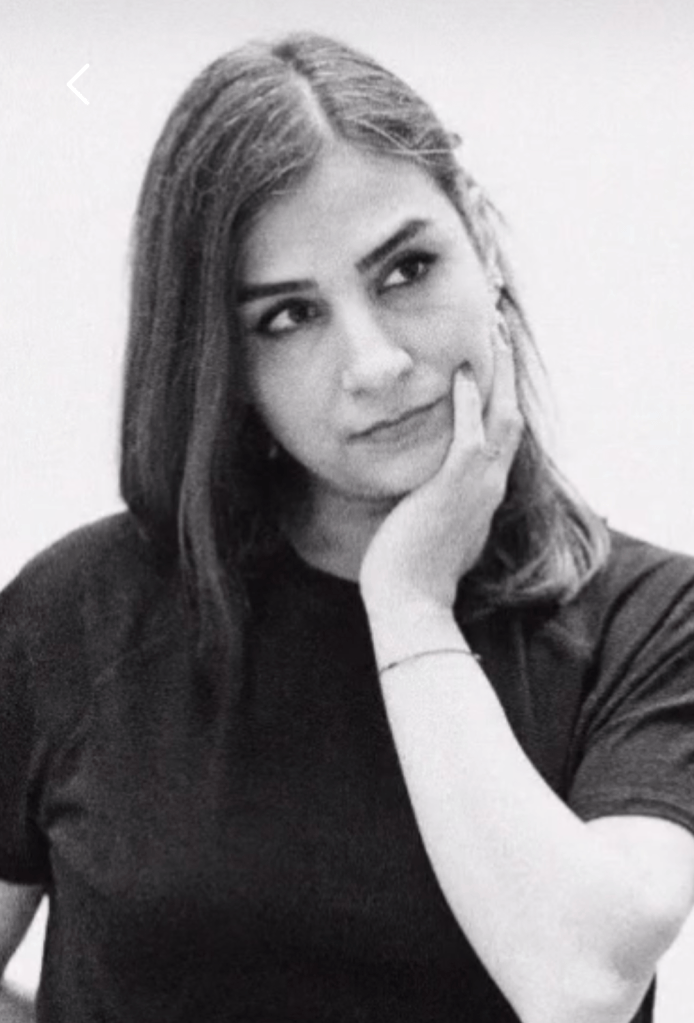
Mahrokh Mofidnakhaei is an Iranian painter based in Manchester, UK. Working primarily in oil painting, her practice explores unstable interiors, memory, and the psychological pressure of displacement. Through layered light, reflections and fragmented architectural forms, her paintings suggest places that appear familiar at first, but gradually become uncertain.
She completed an MA in Painting at Manchester School of Art in 2024, and also holds an MA in Painting from Sooreh University, Tehran. Mofidnakhaei is a member of Castlefield Gallery Associates and was selected for the second cohort of Apollo Painting School. She was also awarded the Haworth Charitable Trust Manchester’s Artist Community Studio Space Scholarship in 2024.
Her recent exhibitions include Manchester Open 2026 at HOME, Manchester; Peripheries at 1853 Studios; and exhibitions with Apollo Painting School at Grundy Art Gallery and Alice Amati. In 2026, she presented a solo exhibition at Radin Art Gallery in Mashhad, Iran.
Overview
These three workshops were developed as part of Global Roots Canvas, exploring how images, marks and
materials can move between collective making and individual studio practice. Across the workshops,
participants worked through choosing, cutting, marking, layering, covering and framing. The materials and
traces from these sessions later became part of Mahrokh Mofidnakhaei’s wider visual research and painting
process.
- Expressive Mark-Making and Collage Workshop with Kim Hubball
Date: Friday 27 March 2026, 10:00–12:30
Venue: 1853 Studios
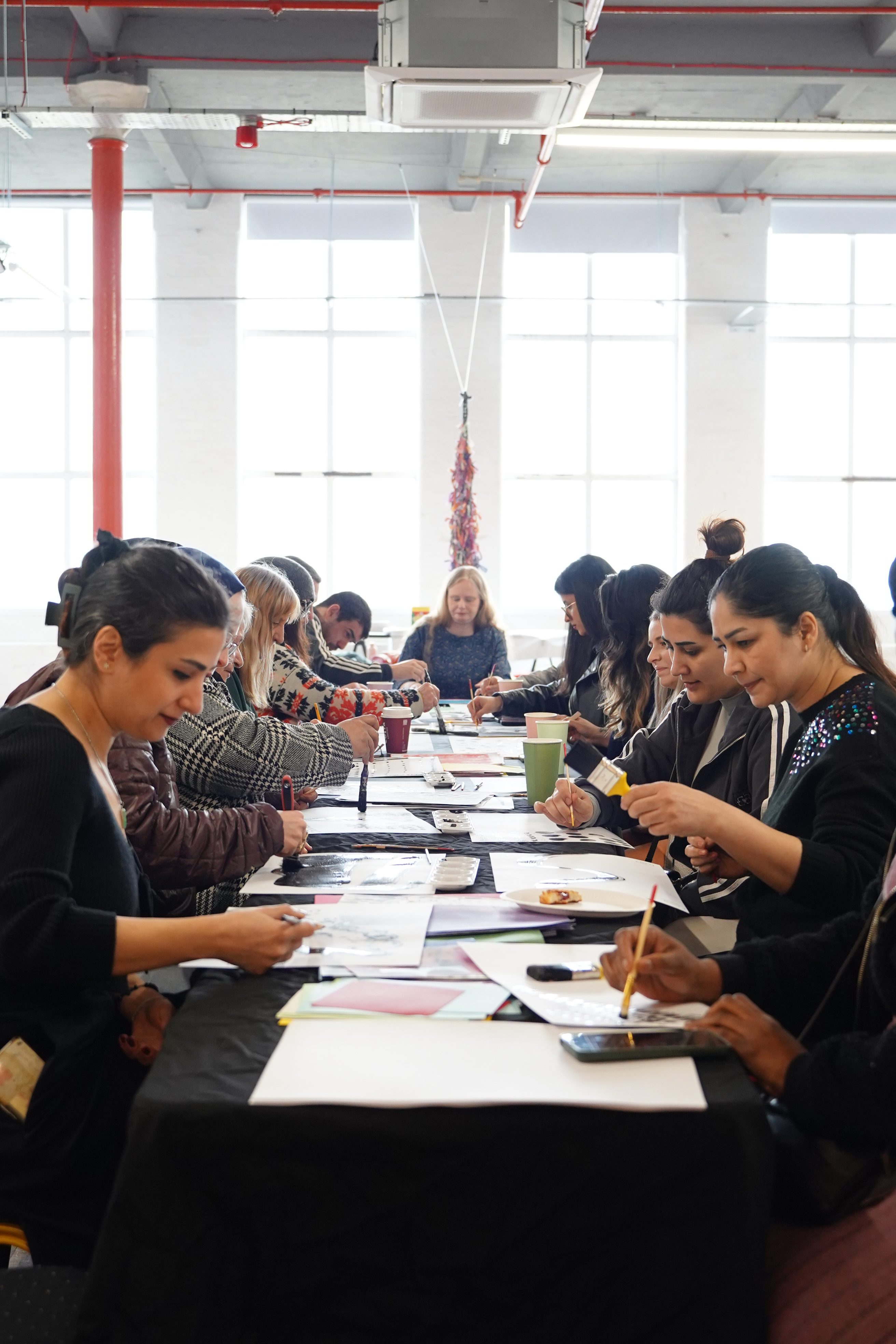
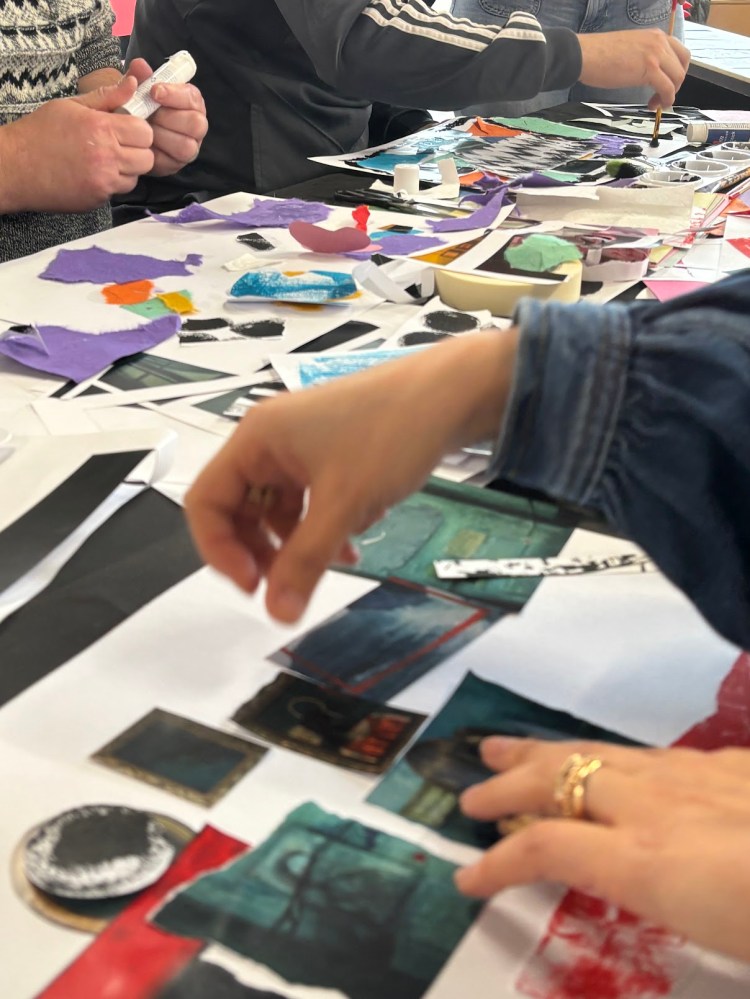
Expressive Mark-Making and Collage Workshop with Kim Hubball was a collaborative workshop run by artist
Kim Hubball, in connection with Global Roots Canvas. The workshop focused on experimentation, intuition
and creative exploration. Participants worked with mark-making tools, drawing ink, textured papers, coloured
papers and printed images, including prints of Mahrokh Mofidnakhaei’s paintings, which were used as part
of the collage material.
The workshop encouraged an open and playful response to colour, shape, texture and pattern. Participants
used cutting, layering, arranging and combining as ways to explore how an image can shift, break apart and
become something new. The materials invited intuitive decisions, allowing each person to build a collage
through movement, touch and visual choice.
The session also included a collaborative element, where individual responses came together as part of a
shared visual surface. For Mahrokh, the workshop became a way of seeing how her own images could be
cut, rearranged and placed into new relationships through other people’s choices, opening up questions
around structure, fragmentation and transformation.
- Collective Mark-Making
Date: Tuesday 28 April 2026, 10:30–12:30
Venue: Islington Mill
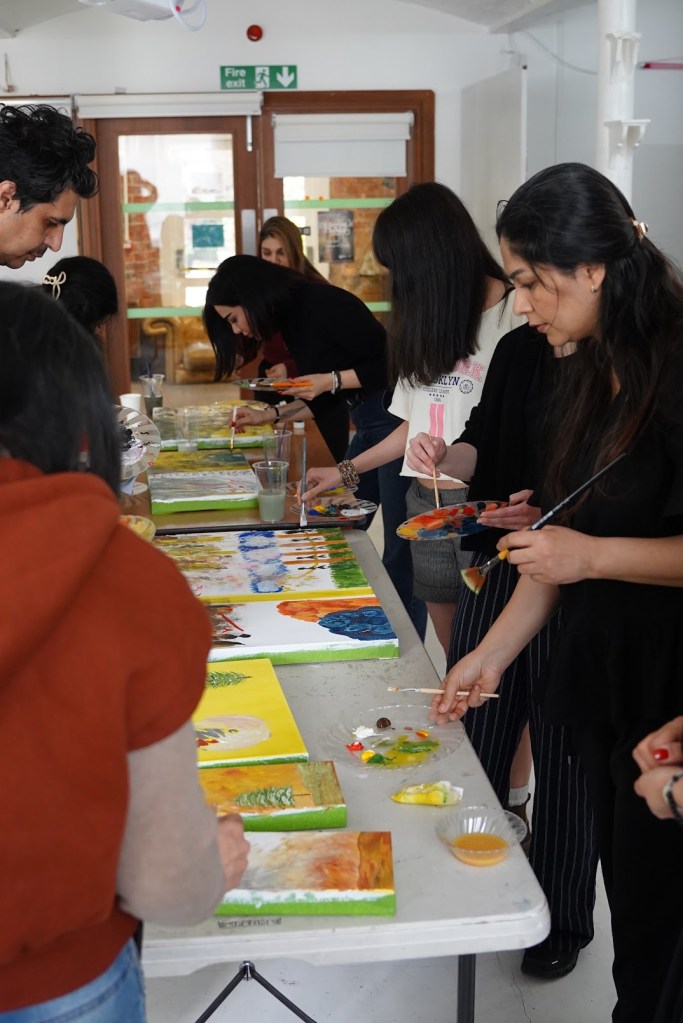
Collective Mark-Making was a collaborative painting workshop exploring image-making through presence,
gesture and expression. The workshop was developed as part of Global Roots Canvas, where workshop
materials and shared creative processes could become part of the artist’s ongoing studio work.
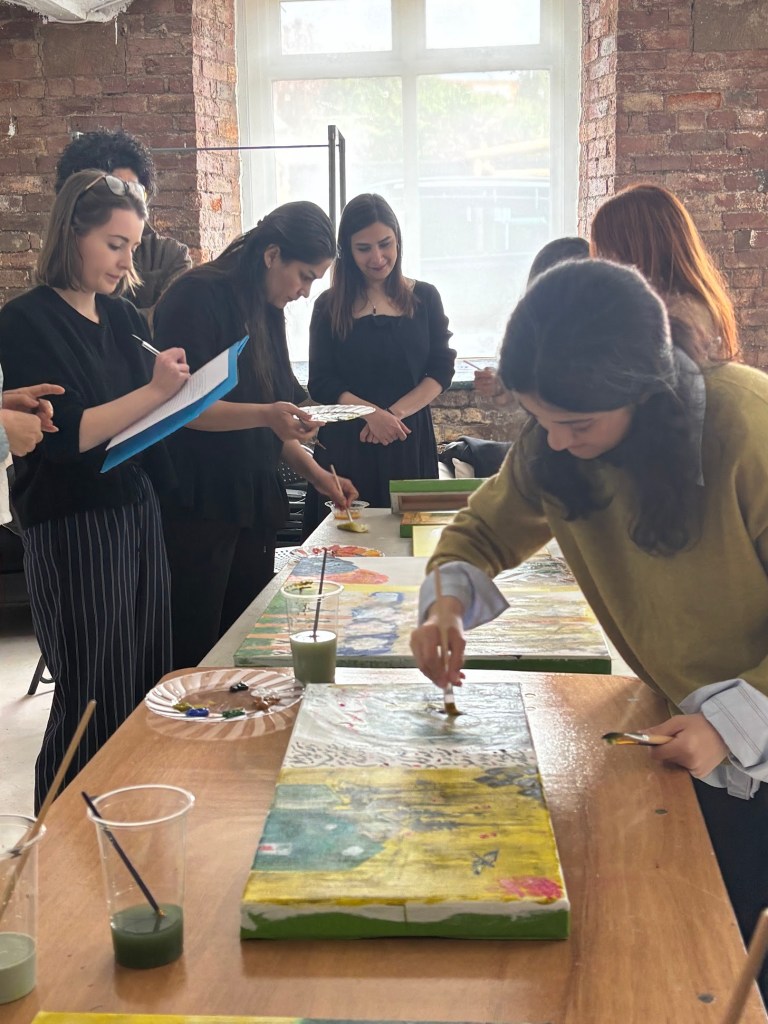
For this session, Mahrokh brought her own canvases into the workshop and invited participants to create the
first layer of the paintings. The canvases became open surfaces where each person could respond through
marks, gestures, colours and visual decisions. Some participants began from a feeling, a memory, an
observation, or something present in their mind at that moment; others responded more intuitively to the
surface, the materials, or the marks already made by someone else. Through these different contributions,
the paintings began with a shared visual field shaped by many hands, rhythms and choices.
Mahrokh was interested in creating a process where the workshop did not end with the session itself. Rather
than presenting the initial workshop canvases as finished outcomes, she wanted the participants’ marks to
become the beginning of a longer painting process. After the workshop, she continued the canvases in her
studio with oil paint, responding to what was already there. In each painting, she kept traces, signs or
fragments from the first layer, allowing them to remain visible, partly hidden or absorbed into new layers of
light, reflection and space. Within this process, covering became a way of carrying something forward rather
than erasing it. Even when a mark is hidden, softened or buried under later layers, it continues to hold a
presence within the painting.
The final paintings developed from this process, carrying the memory of the workshop within their surfaces.
They will be presented as part of the Global Roots Canvas exhibition at 1853 Studios and Bridge 5 Mill.
- Keep, Cover, Frame
Date: Monday 6 July 2026, 11:00
Venue: The Oldham Baptist Church, Chaucer Street, Oldham OL1 3UJ
In partnership with: Ambitions
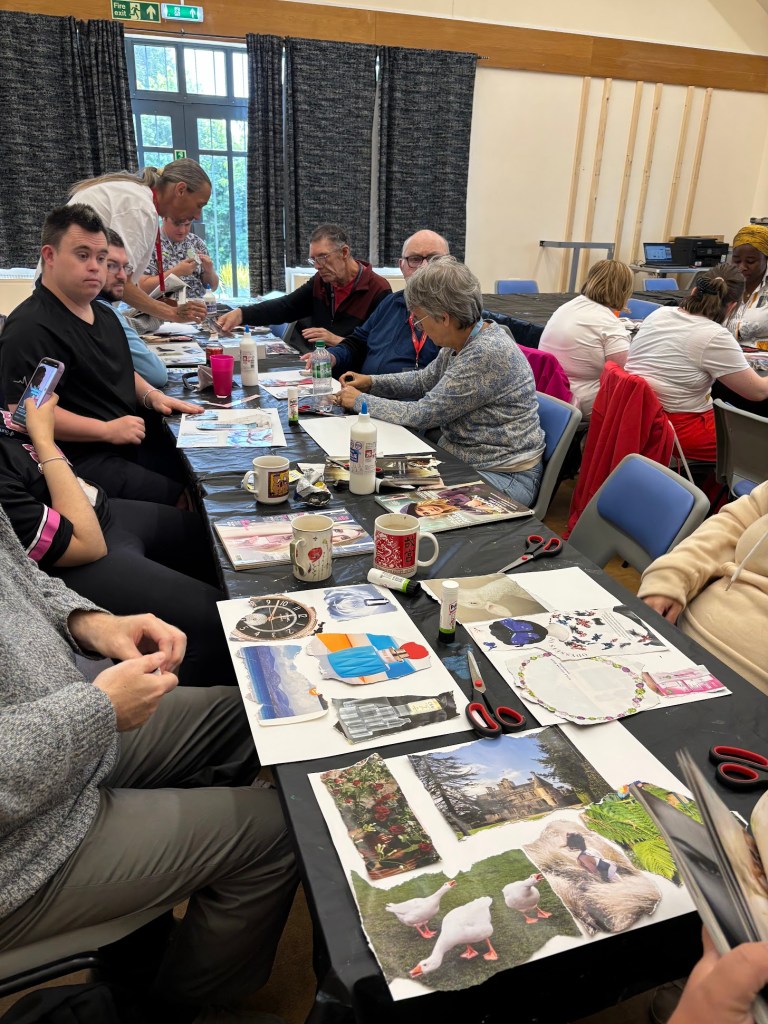
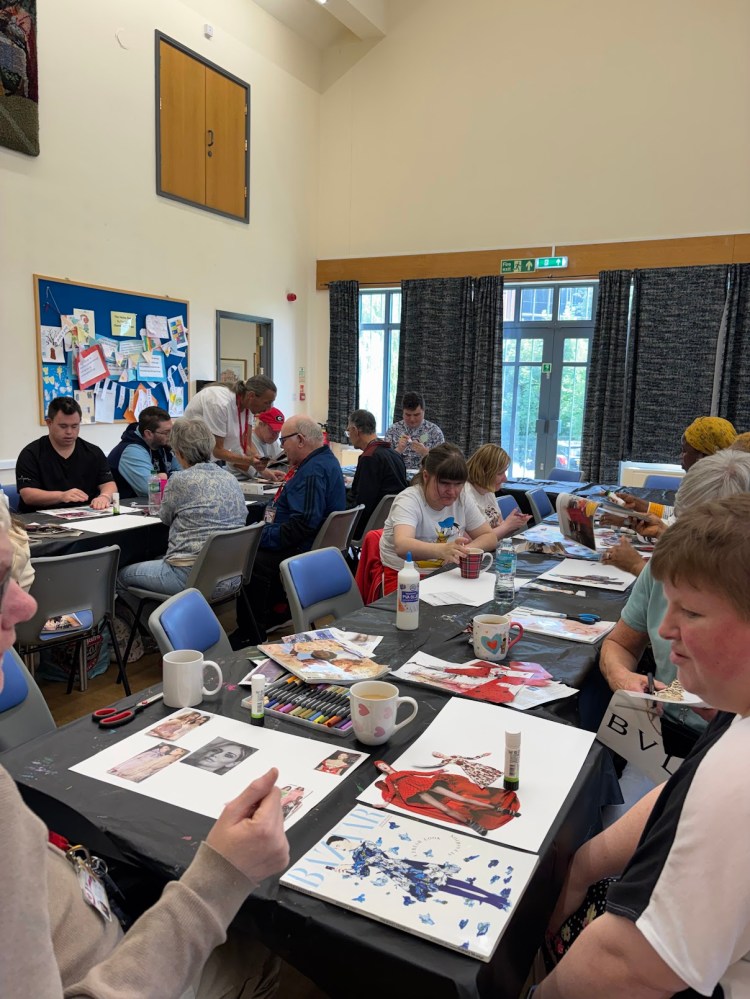
Keep, Cover, Frame was a creative collage workshop developed with the Ambitions group. The workshop
used fashion and magazine images, coloured card, simple shapes and frame-like elements to explore
choice, layering, covering and personal image-making in an accessible way.
Participants began by choosing images, colours, faces, clothes, objects, patterns or places from magazines
that felt interesting or important to them. They cut or tore these images and arranged them onto A3 paper,
building a collage through their own visual choices.
In the next stage, participants used coloured card to create simple shapes and place them over, beside or
around parts of their collage. These shapes could change the image, cover part of it, protect something, hide
something, or create a new space around what they had chosen. Within the workshop, covering was treated
as an active visual decision rather than simply removing something from view.
The final stage focused on framing. Participants returned to their collage and chose the part that felt most
important, special or meaningful to them. By placing black, gold or silver frames around those areas, they
decided what should be brought forward and given attention. Through this process, the workshop explored
how an image can be kept, changed, partly hidden and then re-seen through framing.
 DIPACT CIC